Currently Empty: $0.00

You spot a bottle labeled black seed oil, turn it over, and the question gets more specific fast: is black seed oil vegan, or only the oil itself while the rest of the product tells a different story? For shoppers who care about clean ingredients, cruelty-free standards, and easy daily routines, that distinction matters.
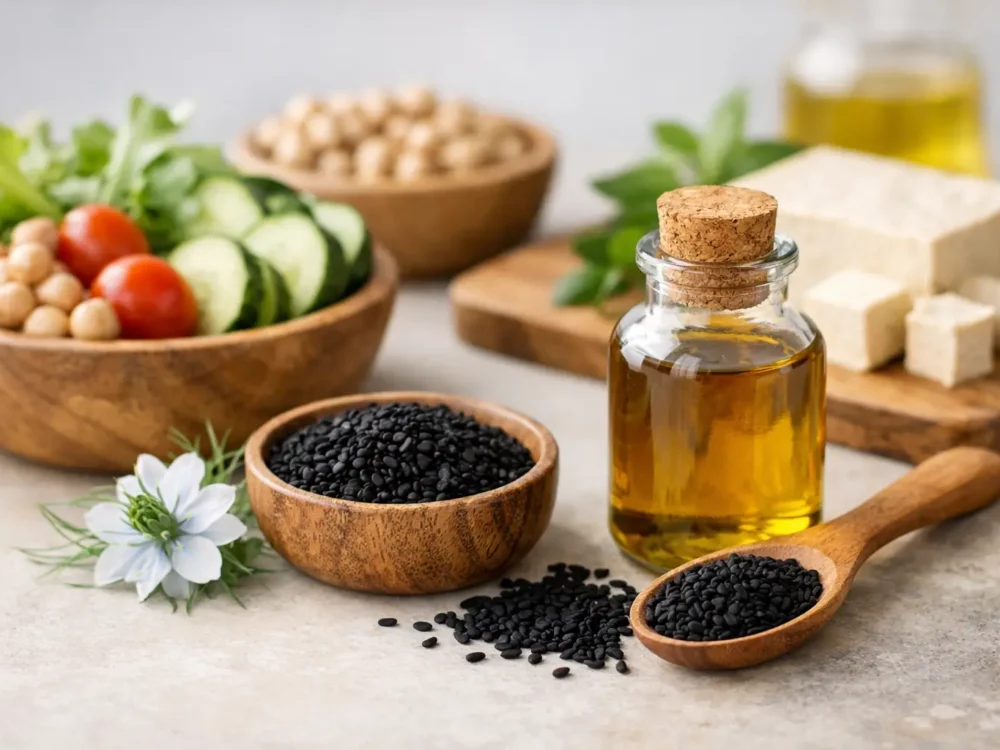
The short answer is yes – pure black seed oil is generally vegan. It is pressed from the seeds of Nigella sativa, a flowering plant, so the oil itself comes from a plant source rather than an animal source. If you are buying a simple liquid black seed oil with no animal-derived additives, it usually fits a vegan lifestyle.
Where things get less straightforward is the finished product. A black seed oil supplement can still include non-vegan ingredients in the capsule shell, flavor system, vitamin blend, or processing aids. That is why the better question is not only whether black seed oil is vegan, but whether the exact product in your cart is vegan from formula to packaging claims.
Is black seed oil vegan in every form?
Not automatically. The ingredient black seed oil is plant-based, but different formats create different checkpoints.
Liquid black seed oil is often the simplest option. If the bottle contains only black seed oil, or black seed oil plus other plant-based oils, it is usually vegan. This is often the cleanest format for shoppers who want minimal ingredients and easy label reading.
Softgels need closer attention. Many supplement softgels are made with gelatin, which is typically sourced from animal collagen. That means a black seed oil softgel can contain a vegan oil inside a non-vegan shell. For busy professionals and routine-focused supplement users, softgels are convenient, but convenience should not come at the cost of ingredient standards if vegan status matters to you.
Capsules and blended formulas also vary. Some use pullulan or other plant-based capsule materials, while others rely on gelatin. Some add beeswax, honey powder, or other animal-derived components to support texture or taste. Those ingredients are not always expected, which is why quick front-label scanning is not enough.
Why people assume black seed oil is always vegan
The confusion makes sense. Black seed oil is strongly associated with natural wellness, traditional use, and clean-label shopping. Products in this category are often marketed with terms like natural, organic, cold-pressed, and non-GMO. Those cues can make a product feel vegan-friendly even when the label has not actually made that claim.
There is also a format problem. Consumers often think of the active ingredient and not the delivery system. If the oil comes from seeds, it feels vegan by default. But supplements are packaged systems, not just ingredients. The shell, the stabilizers, and even the finishing touches can change the answer.
That is especially relevant in e-commerce, where shoppers want a fast yes or no before adding to cart. Clean product positioning helps, but it still needs to be backed by the ingredient panel and clear claims.
How to tell if a black seed oil product is truly vegan
Start with the ingredient list, not the marketing headline. A vegan black seed oil product should avoid obvious animal-derived ingredients such as gelatin, beeswax, honey, milk derivatives, or fish-based additives. If you are looking at softgels, the capsule material is usually the first place to check.
Next, look for an explicit vegan claim on the label or product page. That matters because a product can be plant-based in formula but still avoid making a vegan claim if the brand has not validated every part of the manufacturing or sourcing process. A direct vegan label gives you more confidence that the brand has done the homework.
Cruelty-free claims can be helpful, but they are not the same as vegan. A product may be cruelty-free and still contain gelatin or other animal-derived ingredients. In the same way, natural does not mean vegan, and organic does not mean vegan either.
If the label is vague, check the full specification details before buying. Quality-focused brands typically make this easy by listing capsule material, allergen details, and clean-label badges clearly. When that information is hard to find, it is fair to treat that as a warning sign.
Ingredients that can make black seed oil non-vegan
The most common issue is gelatin in softgels. This is the ingredient that catches most shoppers off guard because the oil inside may still be pure black seed oil. If you prefer softgels for consistency and travel-friendly use, this is the number one detail to verify.
Beeswax is another ingredient to watch. Some oil-based supplements use it to help stabilize the contents or improve texture. It is not present in every formula, but it appears often enough across supplement categories that it is worth checking.
Honey and dairy-based additives are less common in standard black seed oil products but can show up in flavored blends, wellness shots, or specialty formulations. Vitamin D3 can also be a gray area if it is sourced from lanolin rather than a vegan source. That may not apply to plain black seed oil, but it can matter in combination products marketed for immunity or daily wellness.
There are also edge cases around manufacturing. Some strict vegans want to know whether filtration aids, shared production lines, or testing standards align with their values. Not every shopper draws the line in the same place, so the right answer depends on how strict your definition is.
Is black seed oil vegan if it is cold-pressed or organic?
Cold-pressed and organic tell you something useful, but not everything. Cold-pressed usually refers to the extraction method, which many shoppers prefer because it suggests minimal processing. Organic refers to how the seeds were grown and handled. Both are quality markers, but neither one confirms vegan status on its own.
A cold-pressed organic black seed oil can still be sold in a gelatin softgel. It can still include beeswax. It can still avoid making a vegan claim because the manufacturer has not certified it that way. These quality terms matter, but they answer different questions.
For shoppers who care about purity and routine use, the strongest combination is clear sourcing plus clear format details. In other words, you want to know what the oil is, how it was made, and what else comes with it.
The best black seed oil format for vegan shoppers
If you want the simplest path, a pure liquid oil is often the easiest format to assess. It tends to have fewer moving parts and a shorter ingredient list. That makes it easier to confirm whether the product matches your standards.
If you prefer convenience, vegan softgels can still be a strong option. The trade-off is that you need a brand that states clearly the softgel shell is plant-based. For many people, this is worth it. Softgels are easy to take, easier to keep consistent with, and better suited for a daily wellness routine when taste or portability is a factor.
That is where brand transparency becomes a real product benefit, not just a marketing extra. Sterling Nutrition, for example, builds around the idea that convenience should not require compromise, especially for shoppers looking for clear vegan and clean-label cues alongside everyday usability.
What matters beyond vegan status
If you are already checking whether black seed oil is vegan, you are probably also looking at the bigger quality picture. That is smart. Vegan is one filter, but not the only one.
Potency, purity, and freshness still matter. Black seed oil is often chosen for its thymoquinone content, processing quality, and ease of regular use. A vegan product with weak sourcing or poor stability is not automatically the better buy. The best choice is one that aligns with both your values and your wellness routine.
It is also worth thinking about compliance. Some people buy a perfect product on paper and never use it consistently because the taste is too strong or the format is inconvenient. A vegan liquid may be ideal for one person, while a vegan softgel is the better real-life fit for another. The right format is the one you will actually stick with.
So, is black seed oil vegan? Usually yes in its pure oil form, but not always in the product you end up taking. Check the capsule shell, scan for animal-derived extras, and look for a direct vegan claim from a brand that makes ingredient standards easy to verify. When the label is clear, your decision gets a lot easier – and your daily routine does too.